
Abstract
Objectives
To characterize the epidemiology of simultaneous traumatic brain injury (TBI) and ocular trauma.
Materials and Methods
In this retrospective, observational study, de-identified data from patients admitted with ocular trauma and TBI was extracted from the National Trauma Data Bank (2008-2014) using International Classification of Diseases 9th Revision, Clinical Modification diagnostic codes and E-codes relating to injury circumstances. Mechanisms, types of ocular and head injuries, intention, and demographic distribution were determined. Association of variables was calculated with Student’s t and chi-squared tests and logistic regression analysis.
Results
Of 316,485 patients admitted with ocular trauma, 184,124 (58.2%) also had TBI. The mean (standard deviation [SD]) age was 41.8 (23) years. Most were males (69.8%). Race/ethnicity distribution was 68.5% white, 13.3% black, and 11.4% Hispanic patients. The mean (SD) Glasgow Coma Score (GCS) was 12.4 (4.4) and Injury Severity Score (ISS) was 17 (10.6). Frequent injuries were orbital fractures (49.3%) and eye/adnexa contusions (38.3%). Common mechanisms were falls (27.7%) and motor vehicle-occupant (22.6%). Firearm-related trauma (5.2%) had the greatest odds of very severe injury (ISS >24) (odds ratio [OR]: 4.29; p<0.001) and severe TBI (GCS <8) (OR: 5.38; p<0.001). Assault injuries were associated with the greatest odds of mild TBI (OR: 1.36; p<0.001) and self-inflicted injuries with severe TBI (OR: 8.06; p<0.001). Eye/adnexal contusions were most associated with mild TBI (OR: 1.25; p<0.001). Optic nerve/visual pathway injuries had greater odds of severe TBI (OR: 2.91; p<0.001) and mortality (OR: 2.27; p<0.001) than other injuries. Of associated head injuries, the odds of severe TBI were greatest with skull base fractures (OR: 4.07; p<0.001) and mortality with intracerebral hemorrhages (OR: 4.28; p<0.001). Mortality occurred in 5.9% of patients.
Conclusion
TBI occurred in nearly two-thirds of ocular trauma admissions. The mortality rate was low with implications for challenging rehabilitation and long-term disability in survivors.
Keywords: Demographic disparity, falls, intention, motor vehicle accidents, ocular trauma, traumatic brain injury
Introduction
Traumatic brain injury (TBI) is defined as brain injury resulting from blunt force to the head or body, or penetration of the brain or skull. The Centers for Disease Control and Prevention (CDC) categorized TBI into groups based on International Classification of Diseases (ICD) classifications, which include skull fractures, various intracranial injuries, optic nerve/visual pathway injuries, and shaken baby syndrome. TBI is a leading cause of disability and death in the United States and has been shown to predispose children to developmental delay and adults to dementia., , The United States has the highest incidence of TBI in the world, and it causes a disproportionately large financial burden comprising costs from acute medical care to long-term rehabilitation and associated disability., The annual burden of TBI has been estimated to be $13 billion, with a further $64.7 billion from lost productivity.
Mild TBI has been associated with deficits in visual fields, accommodation, vergence, and versions, while more severe TBI may result in additional signs of structural damage. Fifteen percent of those who experience visual symptoms acutely subsequently develop chronic visual deficits. TBI also may lead to chronic psychological and neurocognitive deficits including attention, visuospatial association, and executive function. summarizes the types and ophthalmic consequences of TBI. The proximity and contiguity of the eye to the brain increases the likelihood of simultaneous injuries. While ocular injury is the most common cause of monocular blindness in the United States, the majority survive their injuries. However, mortality in patients with ocular trauma most commonly is associated with concurrent TBI. While several reports have detailed the spectrum of ophthalmic manifestations of TBI,, , , , , , , few studies have studied simultaneous ocular trauma and TBI, with most reports detailing combat-related blast injuries., , , , , We used a national database to characterize epidemiologic patterns of non-combat injury in the United States. Identification of at-risk groups and the circumstances surrounding their injuries may help guide clinical practice, develop preventative measures, and provide a foundation for further research.
Table 1. Summary of types of traumatic brain injury and ophthalmic consequences
Types of TBI | Mild (concussion or GCS 13-15) most common |
|---|---|
Moderate (GCS 9-12) | |
Severe (GCS <8) | |
Primary TBI (initial injury) | Direct (blunt, penetrating) |
Indirect (rotational and acceleration/deceleration forces, pressure waves) | |
Types of primary TBI | Diffuse axonal injury |
Hematoma | |
Contusion | |
Secondary TBI (cascade of events following initial injury) • Most recover from mild TBI (mTBI) within 30 days • Few mTBI proceed to secondary axonopathy even years after initial injury. Most vulnerable are the developing brains of children and the brains of older adults | |
Pathophysiology of secondary TBI | Diffuse cerebral edema |
Vascular/cellular dysregulation | |
Hypoxia/anoxia | |
Hypotension | |
Inflammation | |
Metabolic dysfunction | |
Ophthalmic consequences | Traumatic optic neuropathy • Decreased acuity • Dyschromatopsia • Contrast sensitivity deficits |
Visual field defects | |
Ocular motor nerve palsies (III, IV, VI) → strabismus/impaired ductions | |
Accommodation insufficiency | |
Saccade and anti-saccade deficits | |
Smooth pursuit deficits | |
Convergence insufficiency | |
Nystagmus | |
Pupillary reaction abnormalities | |
Stereopsis reduction | |
Sympathetic pathway disruption - Horner’s syndrome | |
Brain stem injuries • Internuclear ophthalmoplegia • Dorsal midbrain syndrome | |
Higher order dysfunctions | |
• Photophobia | |
• Visual memory deficits | |
• Reaction time deficits | |
• Reading deficits | |
Table constructed with information derived from references detailing visual consequences in TBI.12,13,14,15,16 TBI: Traumatic brain injury, GCS: Glasgow Coma Score
Materials and Methods
The institutional review board of the Albert Einstein College of Medicine approved this evaluation of the National Trauma Data Bank (NTDB) (approval no: #2015-4769, date: 04.08.2015). All data in the NTDB is de-identified and patient consent was deemed unnecessary. The NTDB is one of the world’s largest trauma registries and is maintained by the American College of Surgeons. It contains de-identified data from over 900 centers of all levels. Patients included in this study were admitted with ICD Ninth Revision, Clinical Modification (ICD-9-CM) diagnosis codes 800.00 to 959.9. Details of our methodology and the specific codes used are outlined in a previous publication. The definition of TBI was based on CDC ICD-9-CM criteria: factures of the vault and base of skull (800.0-801.9); multiple fractures of the skull (803.0-804.9); intracranial injuries including concussion, laceration, hemorrhage, and contusion (850.1-850.5, 850.9, 851.0-854.1); injury of the optic nerve and pathway (950.1-950.3); shaken baby syndrome (995.55); and unspecified head injury (959.01). ICD-9-CM codes of ocular injuries were extracted and the associated E-codes (external circumstances of injury) are summarized in . The specific ocular injury categories based on Birmingham Eye Trauma Terminology System and Ocular Trauma Score (OTS) used by ocular trauma surgeons for unified terminology and prediction of visual outcome are not available in the NTDB and were not used in this study.
For each patient, the injury type, mechanism, intent, and location; demographic data including gender, age, race, and ethnicity; and information about the hospital course, including the year of admission, trauma center level (1-4), and length of stay, were documented. Both Injury Severity Score (ISS) and Glasgow Coma Score (GCS) were collected to classify injury severity. ISS is the numerical assignation given to all major trauma, based on parts of the body involved and the degree of injury. These numbers have been found to correlate with hospital stay, morbidity, and mortality. For logistic regression analysis, continuous variables were categorized. ISS was categorized according to NTDB subgroups as minor (1-8), moderate (9-15), severe (16-24), and very severe (>24). GCS, an index of degree of TBI, was categorized as mild (13-15), moderate (9-12), and severe (≤8) brain injury. Age was divided into three groups: pediatric (<21 years), adult (21-64 years), and older adult (≥65 years). Mortality was determined by disposition data, which included discharged home; transferred to another hospital, nursing home, or rehabilitation facility; left against medical advice; transferred to hospice; and death.
Statistical Analysis
All data calculations were performed using SPSS version 24 software (IBM Corp, Armonk, NY, USA). The mean, standard deviation (SD), median, and interquartile range were calculated for all continuous variables. Associations between variables were determined using Student’s t-test and chi-squared test. Univariate logistic regression was used to calculate odds ratios (OR) to determine the relative strength of the association between demographic groups, mechanisms of injury, and degree of TBI and injury severity. Statistical significance was set at p<0.05. Data categorized as undetermined or unknown were excluded from analyses.
Results
General Characteristics
Of 316,485 patients admitted with ocular trauma, 184,124 (58.2%) were also diagnosed with TBI. The mean (SD) age was 43 (23.1) years. Most patients were in the 21-64 year age group (111,494; 60.6%). Males comprised 128,580 (69.8%) and were, on average, younger than females (40.4 vs. 49.1 years; p<0.001). Males outnumbered females in all groups except the ≥80 years age group (). By race, 126,090 patients (68.5%) were white, 24,445 (13.3%) were black, and Hispanics represented 21,025 (11.4%). The most common mechanisms of trauma were falls (51,041; 27.7%), motor vehicle traffic-occupant (MVTO) (41,629; 22.6%), and struck by/against (SBA) (27,942; 15.2%). Blunt force traumas (159,414; 86.6%) outnumbered penetrating traumas (5,884; 3.2%). Frequent locations of injury were the street (82,092; 44.6%) and home (45,631; 24.8%). Most injuries were unintentional (137,454; 74.7%), followed by assault (35,281; 19.2%) and self-inflicted (3,056; 1.7%) ().
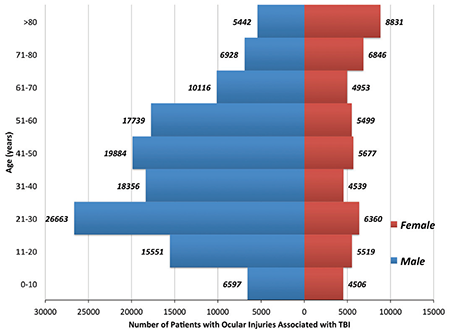
Table 2. Findings and demographic data of patients with ocular injury and traumatic brain injury, National Trauma Data Bank (2008-2014) (N=184,124)
Characteristic | Number | Percent | Characteristic | Number | Percent | Mean (SD) | Median (IQR) | |
|---|---|---|---|---|---|---|---|---|
Year | Age (years) | 43 (23.1) | 41 (24-60) | |||||
2008 | 22584 | 12.3 | 0-10 | 11103 | 6 | |||
2009 | 25152 | 13.7 | 11-20 | 21070 | 11.4 | |||
2010 | 25396 | 13.8 | 21-30 | 33023 | 17.9 | |||
2011 | 25168 | 13.7 | 31-40 | 22895 | 12.4 | |||
2012 | 28375 | 15.4 | 41-50 | 25561 | 13.9 | |||
2013 | 27806 | 15.1 | 51-60 | 23238 | 12.6 | |||
2014 | 29643 | 16.1 | 61-70 | 15069 | 8.2 | |||
Total | 184124 | 100.0 | 71-80 | 13774 | 7.5 | |||
>80 | 14273 | 7.8 | ||||||
Gender | Unknown | 4118 | 0.2 | |||||
Female | 55544 | 30.2 | ||||||
Male | 128580 | 69.8 | Hospital stay | 7.5 (11.4) | 4 (2-8) | |||
1 day | 35046 | 19 | ||||||
Race | 2-3 days | 52854 | 28.7 | |||||
Black | 24445 | 13.3 | 4-6 days | 38837 | 21.1 | |||
White | 126090 | 68.5 | >6 days | 57140 | 31.0 | |||
Other | 33589 | 18.2 | Unknown | 247 | 0.1 | |||
Hispanic | 21025 | 11.4 | Mortality | 10787 | 5.9 | |||
Hospital | ISS | 17 (10.6) | 14 (9-22) | |||||
Level I | 69799 | 37.9 | 1-8 (mild) | 32354 | 17.6 | |||
Level II | 34447 | 18.7 | 9-15 (moderate) | 58941 | 32.0 | |||
Level III | 3198 | 1.7 | 16-24 (severe) | 47413 | 25.8 | |||
Level IV | 252 | 0.1 | >24 (very severe) | 36644 | 19.9 | |||
Not applicable | 76428 | 41.5 | Unknown | 8772 | 4.7 | |||
GCS | 12.2 (4.2) | 14 (11-15) | ||||||
Locations | <8 (severe) | 23862 | 13 | |||||
Street | 82092 | 44.6 | 9-12 (moderate) | 10859 | 5.9 | |||
Home | 45631 | 24.8 | 13-15 (mild) | 83849 | 45.5 | |||
Public building | 10294 | 5.6 | Unknown | 65554 | 35.6 | |||
Recreation | 7190 | 3.9 | ||||||
Residential institution | 6260 | 3.4 | Mechanisms | |||||
Industry | 3203 | 1.7 | Fall | 51041 | 27.7 | |||
Farm | 1043 | 0.6 | MVT-occupant | 41629 | 22.6 | |||
Mine | 99 | 0.1 | Struck by/against | 27942 | 15.2 | |||
Other | 9014 | 4.9 | MVT-motorcyclist | 11575 | 6.3 | |||
Unspecified | 14226 | 7.7 | MVT-pedestrian | 8168 | 4.4 | |||
Unknown | 5072 | 2.8 | Firearms | 5634 | 3.1 | |||
Other | 10274 | 5.6 | ||||||
Unknown | 7340 | 4 | ||||||
US regions | Intention | |||||||
Midwest | 37043 | 20.1 | Assault | 35281 | 19.2 | |||
Northeast | 37066 | 20.1 | Self-inflicted | 3056 | 1.7 | |||
South | 63874 | 34.7 | Unintentional | 137454 | 74.7 | |||
West | 42356 | 23 | Other | 46 | 0.0 | |||
Not applicable | 875 | 0.5 | Undetermined | 947 | 0.5 | |||
Unknown | 2910 | 1.6 | Unknown | 7340 | 4 |
SD: Standard deviation, IQR: Interquartile range, ISS: Injury Severity Score, GCS: Glasgow Coma Score, MVT: Motor vehicle traffic, US: United States of America
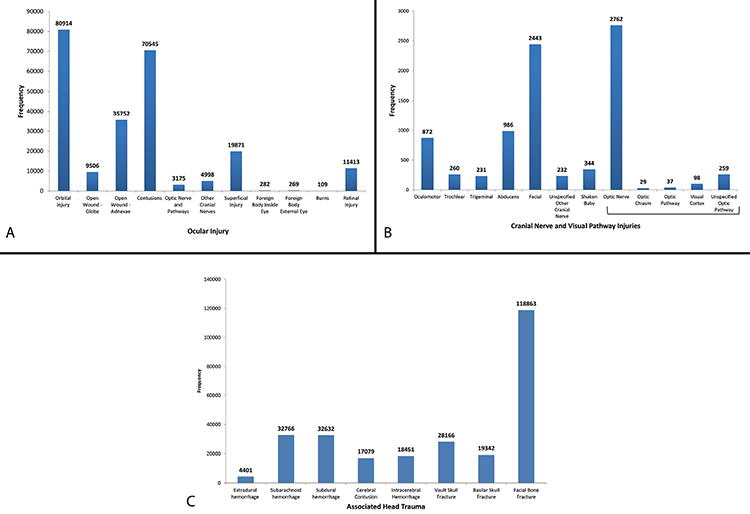
Common ocular injuries were orbital (80,914; 43.9%), contusions of eye/adnexa (70,545; 38.3%), and open wound of ocular adnexa (35,752; 15.1%) (). Retinal injuries were documented in 11,413 patients (6.2%). Of these, the majority were listed as retinal edema (11,132; 6%); retinal hemorrhages, retinal holes, and vitreous hemorrhages each occurred in <1% of cases. Cranial nerve and visual pathway injuries occurred in 8,553 patients (4.6%). Of these, optic nerve/visual pathways injuries (2,762; 32.3%) were most common, followed by facial nerve (2,443; 28.6%) and abducens nerve (986; 11.5%) (). Frequent head injuries were facial fractures (118,863; 64.6%), subarachnoid hemorrhage (32,766; 17.8%), and subdural hemorrhage (32,632; 17.7%) (). Most patients had moderate ISS (58,941; 32%) and mild GCS (126,107; 68.5%). The mean (SD) ISS was 17 (10.6) and mean (SD) GCS was 12.4 (4.4). The mean (SD) hospital stay was 7.5 (11.4) days and the mortality rate was 5.9% (10,787 patients).
Comparative Analysis
Demographic Differences
Patients younger than 21 years of age had the greatest odds of trauma by MVTO (OR: 1.88; 95% confidence interval [CI], 1.83-1.93; p<0.001), while the 21-64 year group had greater odds of trauma due to motor vehicle traffic-motorcyclist (MVTM) (OR: 4.98; 95% CI, 4.70-5.27; p<0.001) than the other age groups. Patients 65 or older had greater odds of sustaining injury from falls (OR: 15.12; 95% CI, 14.71-15.54; p<0.001) (). Regarding intention, the highest odds of unintentional injury were in patients younger than 21 (OR: 1.07; 95% CI, 1.04-1.10; p<0.001) and 65 or older (OR: 7.81; 95% CI, 7.43-8.22; p<0.001), while patients 21-64 years old had the greatest odds of assault (OR: 2.91; 95% CI, 2.83-2.99; p<0.001) and self-inflicted injuries (OR: 1.98; 95% CI, 1.83-2.16; p<0.001). The youngest group had higher odds of injury in recreational facilities than other locations (OR: 2.93; 95% CI, 2.79-3.08; p<0.001), the 21-64 year group, in the street (OR: 1.96; 95% CI, 1.92-2.00; p<0.001), and those 65 or older, at home (OR: 4.42; 95% CI, 4.31-4.53; p<0.001).
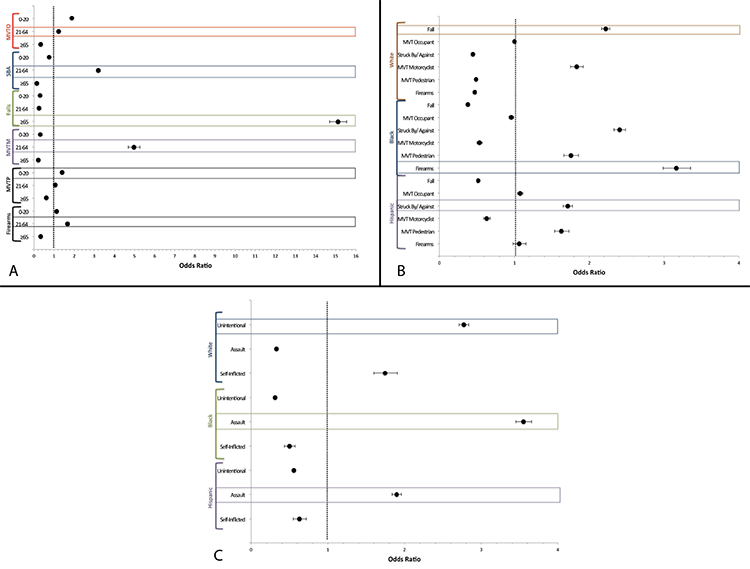
TBI: Traumatic brain injury, MVTO: Motor vehicle traffic-occupant, SBA: Struck by/against, MVTM: Motor vehicle traffic-motorcyclist, MVTP: Motor vehicle traffic-pedestrian
Females were more likely to have unintentional injury (OR: 3.15; 95% CI, 3.06-3.25; p<0.001) and injury by fall (OR: 2.77; 95% CI, 2.71-2.84; p<0.001) or MVTO (OR: 1.37; 95% CI, 1.34-1.40; p<0.001). Females also had greater odds of injury at home (OR: 2.11; 95% CI, 2.06-2.15; p<0.001) and in residential facilities (OR: 2.26; 95% CI, 2.15-2.38; p<0.001). Males were more likely to sustain injury from assault (OR: 3.20; 95% CI, 3.10-3.30; p<0.001) and self-inflicted injury (OR: 2.23; 95% CI, 2.02-2.45; p<0.001). Males also had greater odds of injury by SBA (OR: 3.87; 95% CI, 3.73-4.02; p<0.001), MVTM (OR: 3.28; 95% CI, 3.10-3.47; p<0.001), and firearms (OR: 2.72; 95% CI, 2.52-2.93; p<0.001), and were more likely to sustain injury in the street (OR: 1.24; 95% CI, 1.21-1.27; p<0.001) than females.
White patients were older than black or Hispanic patients, with the greatest odds of being 65 years or older (OR: 2.84; 95% CI, 2.75-2.92; p<0.001). Black patients had the greatest odds of being 21-64 years old (OR: 1.59; 95% CI, 1.54-1.64; p<0.001) and slightly lower odds of being younger than 21 (OR: 1.29; 95% CI, 1.25-1.34; p<0.001). Hispanic patients had greater odds of being younger than 21 years old (OR: 1.56; 95% CI, 1.51-1.61; p<0.001) and lower odds of being 21-64 years old (OR: 1.31; 95% CI, 1.27-1.35; p<0.001) than non-Hispanics. White patients were most likely to be injured by falls (OR: 2.22; 95% CI, 2.17-2.28; p<0.001) and black patients by firearms (OR: 3.17; 95% CI, 2.99-3.36; p<0.001) compared to other races. Hispanic patients also had the greatest odds of injury by SBA (OR: 1.71; 95% CI, 1.65-1.78; p<0.001) and similarly high odds of motor vehicle traffic-pedestrian (MVTP) (OR: 1.63; 95% CI, 1.53-1.73; p<0.001) (). Regarding intent, white patients had the highest odds of unintentional injury (OR: 2.77; 95% CI, 2.71-2.84; p<0.001), while black (OR: 3.55; 95% CI, 3.45-3.66; p<0.001) and Hispanic patients (OR: 1.90; 95% CI, 1.84-1.96; p<0.001) had the greatest odds of injury from assault ().
Mechanism of Trauma
Injury severity varied with the mechanism of injury. SBA (OR: 2.25; 95% CI, 2.18-2.32; p<0.001) had the greatest odds of being associated with minor injury (ISS 1-8), while falls (OR: 1.27; 95% CI, 1.25-1.30; p<0.001) were most associated with moderate injury (ISS 9-15), and MVTO (OR: 1.68; 95% CI, 1.64-1.76; p<0.001) and firearms (OR: 4.29; 95% CI, 4.06-4.53; p<0.001) had greater odds of being associated with very severe injury (ISS >24) than with other severities. GCS also varied with mechanism of injury. Injuries from falls (OR: 2.28; 95% CI, 2.21-2.34; p<0.001) and SBA (OR: 2.43; 95% CI, 2.34-2.52; p<0.001) had the greatest odds of being associated with minor trauma (GCS 13-15). MVTP (OR: 1.32; 95% CI, 1.21-1.44; p<0.001) was most often associated with moderate trauma (GCS 9-12). MVTO (OR: 1.62; 95% CI, 1.57-1.66; p<0.001), MVTM (OR: 1.20; 95% CI, 1.91-2.08; p<0.001), MVTP (OR: 2.15; 95% CI, 2.05-2.26; p<0.001), and firearms (OR: 5.38; 95% CI, 5.09-5.69; p<0.001) were all most likely to be associated with severe trauma (GCS ≤8) ().
Table 3. Simple logistic regression analysis of common mechanism of injury and Glasgow Coma Score in traumatic brain injury with ocular trauma
Glasgow Coma Score | Injury (total) | Frequency (% of total) | p value | Odds ratio | 95% confidence interval |
|---|---|---|---|---|---|
13-15 (mild TBI) | Fall (n=46110) | 38955 (84.5) | <0.001 | 2.277 | 2.214-2.342 |
MVT-occupant (n=39150) | 26749 (68.3) | <0.001 | 0.666 | 0.649-0.682 | |
Struck by/against (n=25324) | 21869 (86.4) | <0.001 | 2.427 | 2.338-2.521 | |
MVT-motorcyclist (n=10994) | 6863 (62.4) | <0.001 | 0.544 | 0.522-0.566 | |
MVT-pedestrian (n=7775) | 4585 (59.0) | <0.001 | 0.473 | 0.451-0.495 | |
Firearms (n=5273) | 2016 (38.2) | <0.001 | 0.199 | 0.188-0.210 | |
9-12 (moderate TBI) | Fall (n=46110) | 2546 (5.5) | 0.372 | 0.979 | 0.934-1.026 |
MVT-occupant (n=39150) | 2167 (5.5) | 0.506 | 0.983 | 0.936-1.033 | |
Struck by/against (n=25324) | 1197 (4.7) | <0.001 | 0.811 | 0.762-0.863 | |
MVT-motorcyclist (n=10994) | 615 (5.6) | 0.968 | 0.998 | 0.918-1.086 | |
MVT-pedestrian (n=7775) | 557 (7.2) | <0.001 | 1.320 | 1.208-1.442 | |
Firearms (n=5273) | 337 (6.4) | 0.011 | 1.156 | 1.033-1.294 | |
≤8 (severe TBI) | Fall (n=46110) | 4609 (10) | <0.001 | 0.355 | 0.343-0.366 |
MVT-occupant (n=39150) | 10234 (26.1) | <0.001 | 1.617 | 1.574-1.661 | |
Struck by/against (n=25324) | 2258 (8.9) | <0.001 | 0.348 | 0.333-0.364 | |
MVT-motorcyclist (n=10994) | 3516 (32.0) | <0.001 | 1.998 | 1.915-2.083 | |
MVT-pedestrian (n=7775) | 2633 (33.9) | <0.001 | 2.151 | 2.049-2.258 | |
Firearms (n=5273) | 2920 (55.4) | <0.001 | 5.381 | 5.090-5.690 |
TBI: Traumatic brain injury, MVT: Motor vehicle traffic
Injury Severity and Degree of Traumatic Brain Injury
Assault injuries were mostly associated with minor injury (OR: 1.67; 95% CI, 1.63-1.72; p<0.001) while self-inflicted injuries (OR: 5.24; 95% CI, 4.87-5.64; p<0.001) were mostly associated with very severe injury according to ISS. Similarly, assault injuries had the greatest odds of association with minor TBI (OR: 1.36; 95% CI, 1.32-1.40; p<0.001) and self-inflicted injuries, with severe TBI (OR: 8.06; 95% CI, 7.45-8.72; p<0.001) ().
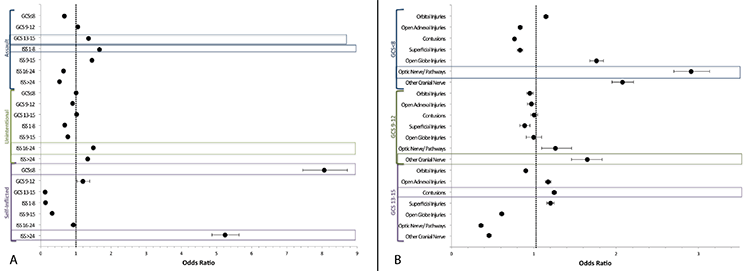
GCS: Glasgow Coma Score, ISS: Injury Severity Score, TBI: Traumatic brain injury
Optic nerve and visual pathway injuries were associated with greater odds of severe TBI than other injuries (OR: 2.91; 95% CI, 2.70-3.14; p<0.001). Eye/adnexal contusions (OR: 1.25; 95% CI, 1.22-1.28; p<0.001) were most associated with minor TBI. Open globe injuries were most associated with severe TBI compared to lower levels of TBI (OR: 1.76; 95% CI, 1.68-1.85; p<0.001) (). Traumatic optic neuropathy was more associated with mortality (OR: 2.27; 95% CI, 2.02-2.55; p<0.001) than other visual pathway injuries. Of ocular motor nerve palsies, third nerve palsy had greatest association with severe TBI (OR: 4.32; 95% CI, 3.76-4.96; p<0.001), while sixth nerve palsy was most associated with moderate TBI (OR: 2.00; 95% CI, 1.62-2.48; p<0.001). There was no strong relation between fourth nerve palsy and any TBI category. Of the related head injuries, skull base fractures had the greatest odds of severe TBI (OR: 4.07; 95% CI, 3.95-4.21; p<0.001), while intracerebral hemorrhages (OR: 4.28; 95% CI, 4.10-4.48; p<0.001) and skull base fractures (OR: 3.74; 95% CI, 3.57-3.91; p<0.001) had similarly high odds of mortality-related trauma.
Discussion
TBI has received the most attention in relation to sport and combat-related injury, but is now increasingly recognized in other forms of trauma. Numerous studies have examined the visual and ocular sequelae of TBI., , , , , , , However, few have evaluated the concurrence of ocular trauma and TBI and the circumstances of injury., , , , , It is important for physicians to understand this association and identify at-risk populations, as they will frequently encounter patients with these comorbidities and may be a part of multidisciplinary teams managing the acute care and long-term rehabilitation.
We found that a majority of patients admitted with ocular injuries had associated TBI. These patients were predominantly male, white, between 21 and 64 years old, and from the southern United States. Most injuries resulted from blunt force trauma and were unintentional. Although falls were the most common mechanism for the whole group, mechanisms varied amongst different demographic groups. Males were more often injured by SBA, MVTM, and firearms, and females by falls and MVTO. Furthermore, males were more likely to suffer assault or self-inflicted injury, while females were more likely to suffer unintentional injury. Scruggs et al. in their study of ocular injuries in trauma patients using weighted NTDB data also found that patients were more likely to be male and white. However, their average age was 38.2 years, which is younger than the average of 41.8 years in our study. Also, they found MVTO to be the most frequent mechanism of injury among patients with ocular injury of any type, with falls being the next most frequent. These differences likely resulted from sourcing different datasets and our subgroup focus, which may have skewed our findings towards an older group more prone to falls.
Falls were often associated with moderate injury severity and minor TBI, and occurred most at home and in residential facilities. However, GCS has been shown to be a poor predictor of mortality in older adults, as they tend to present with higher GCS (lower TBI level) relative to injury severity compared to younger patients. Furthermore, the mortality from falls among older adults in the United States has been shown to be very high. Han et al. examined ethnic and racial differences in falls in adults older than 65 years and found that falls and consequent mortality was highest amongst white patients compared to black and Hispanic patients. This is consistent with our findings that falls were most common among white patients. Although previous literature has addressed both diagnoses separately, to our knowledge, there have not been any studies of concurrent TBI and ocular injury resulting from falls.
Gardner et al. conducted a scoping review to examine TBI in older adults and found that over 50% of those aged 65-74 years had TBI from falls, which increased to over 70% in the 75-84 years group and over 80% in those 85 and older. Furthermore, they found that most patients with TBI tended to be white females. Results are similar in studies examining ocular injury alone. McGwin et al. used the National Hospital Ambulatory Medical Care and National Hospital Discharge surveys to evaluate eye injuries in the United States. Of 422,604 patient visits, they found that falls were highest in females older than 60 years of age. These findings concur with our results of fall-related eye injuries being most frequently observed in women and in patients 65 and older. In a study of isolated orbital fractures, Toivari et al. also found that falls were the most frequent mechanism of injury in the older age group.
With respect to racial variations, we found that young black patients represented an especially vulnerable population. Our study revealed that black patients incurred their injuries mostly from assault and were at highest risk for firearm-related injury than another race/ethnicity. Firearm-related injuries were mostly associated with very severe injury and severe TBI, carrying implications for poor outcomes for this group. Our findings are supported by McGwin et al., who identified young, male, black patients to be at highest risk of gun-related eye injury. Bertisch et al. examined 399 survivors of firearm brain injury and found that black patients were disproportionately affected and often victims of assault. In our study, unintentional injuries outnumbered other intentions among white patients, although white and male patients were more prone to self-inflicted injuries than other group. These injuries had the highest ISS and levels of TBI, a finding that comports with other studies., Most of these patients survived their injuries and represent an at-risk group that can be targeted to prevent further attempts.
Orbital injuries and eye/adnexal contusion were the most frequently identified ocular injuries concurrent with TBI, while open-globe injuries were less common. Weichel et al. studied combat-related ocular trauma and found that TBI was present in 66.4% of cases. Closed-globe injuries were more frequent than open-globe injuries. Their study also revealed that TBI ranged evenly from mild to severe. Although our study revealed a similar preponderance of ocular injuries, TBI was mostly mild. This might reflect the relative severity of combat-related versus civilian injuries. Despite these differences, we noted that concurrent open-globe injury and TBI were mostly associated with severe TBI rather than other levels of TBI (). This implies greater injury severity that might impact management planning by ophthalmic surgeons as part of the multidisciplinary trauma team.
Retinal injuries occurred in 6.2% of all patients with TBI in this population. Several reports have associated retinal findings in patients with TBI., , , In a recent study that looked specifically at ocular injuries in children with documented abusive head trauma, Weiss et al. used the same NTDB source and found that retinal edema was more associated with severe TBI (GCS <8) (OR: 1.19; p=0.051) and severe ISS: 16-24 (OR: 1.21; p=0.030) than other categories of injury severity. In the present study, retinal hemorrhages also had the greatest association with severe ISS (OR: 1.69; p=0.005), but there was no propensity for association with any category of TBI.
Traumatic optic neuropathy represented 1.5% of all ocular injuries with TBI and had the highest association with mortality. Warner and Eggenberger estimated that traumatic optic neuropathy occurred in 0.5-5% of closed head injuries and up to 10% of craniofacial fractures, which comports with our findings. Contrary to other studies, we found that abducens (sixth) nerve injuries outnumbered oculomotor (third) and trochlear (fourth) nerve injuries. Gise et al., who found similar relative frequencies in pediatric ocular motor nerve injuries with TBI, suggested this is likely due to observer bias. Emergency department physicians evaluating patients in the context of acute major trauma may find it easier to identify the adducted eye of sixth nerve palsy than other ocular motor nerve palsies which might require more patient cooperation and a skilled examiner. Heo and Lambert used claims data (2007-2016) and assessed rates of muscle transposition surgery and chemodenervation in third, fourth, and sixth nerve palsy in patients with TBI. They found that out of 2,606,600 patients with TBI, 1,851 patients (0.071%) had ocular motor nerve palsy and fourth nerve palsies were most frequent (37.7%). They also noted that third nerve palsy was most associated with moderate to severe TBI. We similarly found a stronger association between severe TBI and third nerve palsies compared to other ocular motor nerve palsies.
Study Limitations
This study has several strengths, including the large dataset which allows a detailed analysis. Also, the availability of grades of GCS and ISS enabled analysis of associations between mechanisms, intentions, and various injuries with grades of TBI and global body injury. However, important limitations include the retrospective, database-sourced design. The NTDB is submitted by trauma teams and the spectrum of reported ocular injuries may represent underestimations. Ophthalmic injury details were grouped in broad categories without details that usually are subsequently outlined by ophthalmic surgeons. Citirik et al. detailed clinical and ancillary findings in patients with Terson’s syndrome and TBI, and visual outcomes following pars plana vitrectomy. Vision improved in all patients, all of whom were operated on more than 6 months post-injury. These findings are useful and might help guide ophthalmic surgeons managing this ocular trauma. Similar specific clinical, management, and outcome details are not available in the NTDB.
OTS, a system of grading the degree of ocular trauma using injury variables (initial vision, ruptured globe, endophthalmitis, perforating injury, retinal detachment, and afferent pupillary defect), to predict final visual outcome is not available in this database. Ophthalmic outcomes are also missing from the NTDB. In a recent paper, Sia et al. reported visual outcomes of 88 patients at Walter Reed National Military Medical Center admitted following combat-related trauma. They found that patients with ocular trauma alone had better vision-related quality of life than those with ocular trauma and TBI.
Lastly, this data also employed ICD-9-CM codes used between 2008-2014, which are not as specific as new ICD-10-CM codes. We did not use more recent data using the ICD-10-CM to ensure uniformity of code style for consistent analysis. With respect to the most documented retinal injury of “retinal edema”, commotio retinae/Berlin’s edema is classified under the non-specific ocular contusion/concussion with the ICD-9-CM code 921.3. The current ICD-10-CM is similarly non-specific. The American Academy of Ophthalmology has recommended using H35.81 for “other specified retinal disorders; retinal edema for commotio retina”, with the addition of a mechanism of injury.
Despite these limitations, the findings disclosed herein are worthy of consideration. A recent meta-analysis reviewed ocular trauma publications over the last 20 years and found reported ocular trauma with concomitant TBI in 38-64% of open-globe injuries and 39-47% in closed-globe cases. In the Walter Reed Ocular Trauma Database, 40% of patients with ocular trauma had concomitant TBI. Although the reviewed reports all detail combat-related injuries, they comport with our findings of TBI in 58% of all ocular trauma of all mechanisms. Physicians managing trauma need to be aware of the frequent concurrence of TBI and ocular trauma and be acquainted with the spectrum of ophthalmic sequelae of TBI that may require long-term rehabilitation after acute surgical intervention.
Conclusion
TBI was a frequent finding in admitted trauma patients with ocular injury. Males and patients in their productive years were most frequently affected. Mechanisms and intentions of injuries varied with demographic groups. Similar analytical studies that confirm our findings will not only help inform providers of the frequent concurrence of ocular trauma and TBI in the general population but may help guide screening and rehabilitation efforts and help policy makers develop focused interventional strategies that measurably reduce ocular trauma.
Footnotes
Acknowledgements
The authors would like to thank John McNelis MD, FACS, FCCM, MHCM (Department of Surgery), Melvin E. Stone Jr MD (Associate Director, Trauma Services & Surgical Critical Care; Department of Surgery), and James A. Meltzer MD (Department of Pediatrics) of Jacobi Medical Center in Bronx, New York for their contributions and support.
Ethics
Ethics Committee Approval: The institutional review board of the Albert Einstein College of Medicine approved this evaluation of the National Trauma Data Bank (NTDB) (approval no: #2015-4769, date: 04.08.2015).
Informed Consent: All data in the NTDB is de-identified and patient consent was deemed unnecessary.
Authorship Contributions
Concept: T.T., C.H.H., J.N.M., Design: T.T., C.H.H., J.N.M., Data Collection or Processing: K.Z., T.T., C.H.H., A.P., J.N.M., Analysis or Interpretation: K.Z., T.T., C.H.H., A.P., J.N.M., Literature Search: K.Z., J.N.M., Writing: K.Z., T.T., C.H.H., A.P., J.N.M.
Conflict of Interest: No conflict of interest was declared by the authors.
Financial Disclosure: The authors declared that this study received no financial support.
References
Traumatic Brain Injury (TBI). Athttps://www.ninds.nih.gov/health-information/disorders/traumatic-brain-injury-tbi. Accessed March 2, 2024.
Faul M, Xu L, Wald MM, Coronado VG. Traumatic brain Injury in the United States: Emergency Department Visits, Hospitalizations and Deaths 2002–2006. Atlanta (GA): Centers for Disease Control and Prevention, National Center for Injury Prevention and Control; 2010. Available at:https://www.cdc.gov/traumatic-brain-injury/?CDC_AAref_Val=https://www.cdc.gov/traumaticbraininjury/pdf/blue_book.pdf. Accessed February 2020.
Taylor CA, Bell JM, Breiding MJ, Xu L. Traumatic Brain Injury-Related Emergency Department Visits, Hospitalizations, and Deaths - United States, 2007 and 2013. MMWR Surveill Summ. 2017;66:1-16.
Königs M, Weeda WD, van Heurn LW, Vermeulen RJ, Goslings JC, Luitse JS, Poll-The BT, Beelen A, van der Wees M, Kemps RJ, Catsman-Berrevoets CE, Oosterlaan J. Pediatric traumatic brain injury affects multisensory integration. Neuropsychology. 2017;31:137-148.
Mendez MF. What is the Relationship of Traumatic Brain Injury to Dementia? J Alzheimers Dis. 2017;57:667-681.
Dewan MC, Rattani A, Gupta S, Baticulon RE, Hung YC, Punchak M, Agrawal A, Adeleye AO, Shrime MG, Rubiano AM, Rosenfeld JV, Park KB. Estimating the global incidence of traumatic brain injury. J Neurosurg. 2018;:-
Spitz G, McKenzie D, Attwood D, Ponsford JL. Cost prediction following traumatic brain injury: model development and validation. J Neurol Neurosurg Psychiatry. 2016;87:173-180.
Ma VY, Chan L, Carruthers KJ. Incidence, prevalence, costs, and impact on disability of common conditions requiring rehabilitation in the United States: stroke, spinal cord injury, traumatic brain injury, multiple sclerosis, osteoarthritis, rheumatoid arthritis, limb loss, and back pain. Arch Phys Med Rehabil. 2014;95:986-995.
Barnett BP, Singman EL. Vision concerns after mild traumatic brain injury. Curr Treat Options Neurol. 2015;17:329.
Roozenbeek B, Maas AI, Menon DK. Changing patterns in the epidemiology of traumatic brain injury. Nat Rev Neurol. 2013;9:231-236.
Joos E, Inaba K, Karamanos E, Byerly S, Nozanov L, Vogt K, Grabo D, Demetriades D. Ocular trauma at a level I trauma center: the burden of penetrating injuries. Am Surg. 2014;80:207-209.
Merezhinskaya N, Mallia RK, Park D, Bryden DW, Mathur K, Barker FM 2nd. Visual Deficits and Dysfunctions Associated with Traumatic Brain Injury: A Systematic Review and Meta-analysis. Optom Vis Sci. 2019;96:542-555.
Sen N. An insight into the vision impairment following traumatic brain injury. Neurochem Int. 2017;111:103-107.
Ventura RE, Balcer LJ, Galetta SL. The neuro-ophthalmology of head trauma. Lancet Neurol. 2014;13:1006-1016.
Jacobs SM, Van Stavern GP. Neuro-ophthalmic deficits after head trauma. Curr Neurol Neurosci Rep. 2013;13:389.
Wright WG, Tierney RT, McDevitt J. Visual-vestibular processing deficits in mild traumatic brain injury. J Vestib Res. 2017;27:27-37.
Cockerham GC, Goodrich GL, Weichel ED, Orcutt JC, Rizzo JF, Bower KS, Schuchard RA. Eye and visual function in traumatic brain injury. J Rehabil Res Dev. 2009;46:811-818.
Weichel ED, Colyer MH, Bautista C, Bower KS, French LM. Traumatic brain injury associated with combat ocular trauma. J Head Trauma Rehabil. 2009;24:41-50.
Gise R, Truong T, Poulsen DM, Soliman Y, Parsikia A, Mbekeani JN. Pediatric traumatic brain injury and ocular injury. J AAPOS. 2018;22:421-425.
Sia RK, Ryan DS, Brooks DI, Kagemann JM, Bower KS, French LM, Justin GA, Colyer MH. The Impact of Combat Ocular Trauma and Traumatic Brain Injury on Vision- and Health-Related Quality of Life Among U.S. Military Casualties. Mil Med. 2022;187:209-215.
Lee I, Davis B, Purt B, DesRosiers T. Ocular Trauma and Traumatic Brain Injury on the Battlefield: A Systematic Review After 20 Years of Fighting the Global War on Terror. Mil Med. 2023;188:2916-2923.
Heo H, Lambert SR. Ocular Motor Nerve Palsy After Traumatic Brain Injury: A Claims Database Study. J Neuroophthalmol. 2023;43:131-136.
Citirik M, Tekin K, Teke MY. Terson syndrome with persistent vitreous hemorrhage following traumatic brain injury. Saudi J Ophthalmol. 2019;33:392-397.
National Trauma Data Bank 2014 Annual Report. Available at:https://www.facs.org/media/g5oa51fk/ntdb-annual-report-2014.pdf. Accessed January 2019.
Kuhn F, Morris R, Witherspoon CD, Mester V. The Birmingham Eye Trauma Terminology system (BETT). J Fr Ophtalmol. 2004;27:206-210.
Kuhn F, Maisiak R, Mann L, Mester V, Morris R, Witherspoon CD. The Ocular Trauma Score (OTS). Ophthalmol Clin North Am. 2002;15:163-166.
Scruggs D, Scruggs R, Stukenborg G, Netland PA, Calland JF. Ocular injuries in trauma patients: an analysis of 28,340 trauma admissions in the 2003-2007 National Trauma Data Bank National Sample Program. J Trauma Acute Care Surg. 2012;73:1308-1312.
Salottolo K, Levy AS, Slone DS, Mains CW, Bar-Or D. The effect of age on Glasgow Coma Scale score in patients with traumatic brain injury. JAMA Surg. 2014;149:727-734.
Burns E, Kakara R. Deaths from Falls Among Persons Aged ≥65 Years - United States, 2007-2016. MMWR Morb Mortal Wkly Rep. 2018;67:509-514.
Han BH, Ferris R, Blaum C. Exploring ethnic and racial differences in falls among older adults. J Community Health. 2014;39:1241-1247.
Gardner RC, Dams-O’Connor K, Morrissey MR, Manley GT. Geriatric Traumatic Brain Injury: Epidemiology, Outcomes, Knowledge Gaps, and Future Directions. J Neurotrauma. 2018;35:889-906.
McGwin G Jr, Xie A, Owsley C. Rate of eye injury in the United States. Arch Ophthalmol. 2005;123:970-976.
Toivari M, Suominen AL, Apajalahti S, Lindqvist C, Snäll J, Thorén H. Isolated Orbital Fractures Are Severe Among Geriatric Patients. J Oral Maxillofac Surg. 2018;76:388-395.
McGwin G Jr, Hall TA, Xie A, Owsley C. Gun-related eye injury in the United States, 1993-2002. Ophthalmic Epidemiol. Ophthalmic Epidemiol. 2006;13:15-21.
Bertisch H, Krellman JW, Bergquist TF, Dreer LE, Ellois V, Bushnik T. Characteristics of Firearm Brain Injury Survivors in the Traumatic Brain Injury Model Systems (TBIMS) National Database: A Comparison of Assault and Self-Inflicted Injury Survivors. Arch Phys Med Rehabil. 2017;98:2288-2294.
National Institute of Mental Health Report, 2019. Suicide. Available at:https://www.nimh.nih.gov/health/statistics/suicide.shtml#part_154971. Accessed Feb 1, 2020.
Truong T, He CH, Poulsen DM, Parsikia A, Mbekeani JN. Firearm-associated ocular injuries: analysis of national trauma data. Arq Bras Oftalmol. 2021;84:58-66.
Levin AV. Retinal haemorrhage and child abuse. In: David TJ, ed. Recent Advances in Paediatrics, No. 18, Churchill Livingstone; London;. 2000:151-219.
Mills M. Funduscopic lesions associated with mortality in shaken baby syndrome. J AAPOS. 1998;2:67-71.
Weiss R, He CH, Khan S, Parsikia A, Mbekeani JN. Ocular Injuries in Pediatric Patients Admitted With Abusive Head Trauma. Pediatr Neurol. 2022;127:11-18.
Warner N, Eggenberger E. Traumatic optic neuropathy: a review of the current literature. Curr Opin Ophthalmol. 2010;21:459-462.
Commotio Retina Involving Macula - Coding for Ocular Trauma case study. Available athttps://www.aao.org/practice-management/news-detail/commotio-retina-coding-ocular-trauma-case#:~:text=ICD%2D10%20Selection,retinal%20edema%20for%20commotio%20retina. Accessed 6-15-2024.
Supplementary Materials
Supplementary Table 1. Internal Classification of Diseases, Ninth Revision, Clinical Modification (ICD-9-CM) codes and supplemental E-codes extracted from the National Trauma Data Bank (2008-2014)
Download